)
AuAg Critical Insights | Geo-economics (part one) – "Commodity investments in a new world order"
This is the first article in a series exploring the new world order through the lens of commodity investors. Commodities have become more than just tradable goods – in a time marked by geopolitical tensions and economic fragmentation, they are central to national security and global influence. This new geoeconomic reality is changing the rules of the game for investments in metals and minerals. Read on to understand how these changes are impacting the market – and what they mean for you as an investor.
Geo-economics and the new rules of the commodity market
The global economic order is undergoing a significant transformation. The formerly liberal trade regime is being challenged by an increasingly strategic and state-directed economy. Trade restrictions, protectionism, and government control are now affecting global value chains in ways that directly alter the conditions for investment. This is particularly evident in the commodity sector, where metals and minerals are no longer commodities but strategic resources tied to national security and industrial strength.
For investors, this marks a new reality where geo-economic risks—security politicization, economic warfare, and fragmentation—affect both the supply and pricing of critical minerals. Understanding how state strategies and geopolitics shape these risks is essential for making informed investment decisions.
The geo-economic order
In recent decades, globalization has been shaped by a liberal economic order in which market forces and companies have been central in shaping international trade networks. Global regulations and institutions created stable conditions for trade and investment, fostering mutual dependencies among nations and laying the groundwork for worldwide integration and growth.
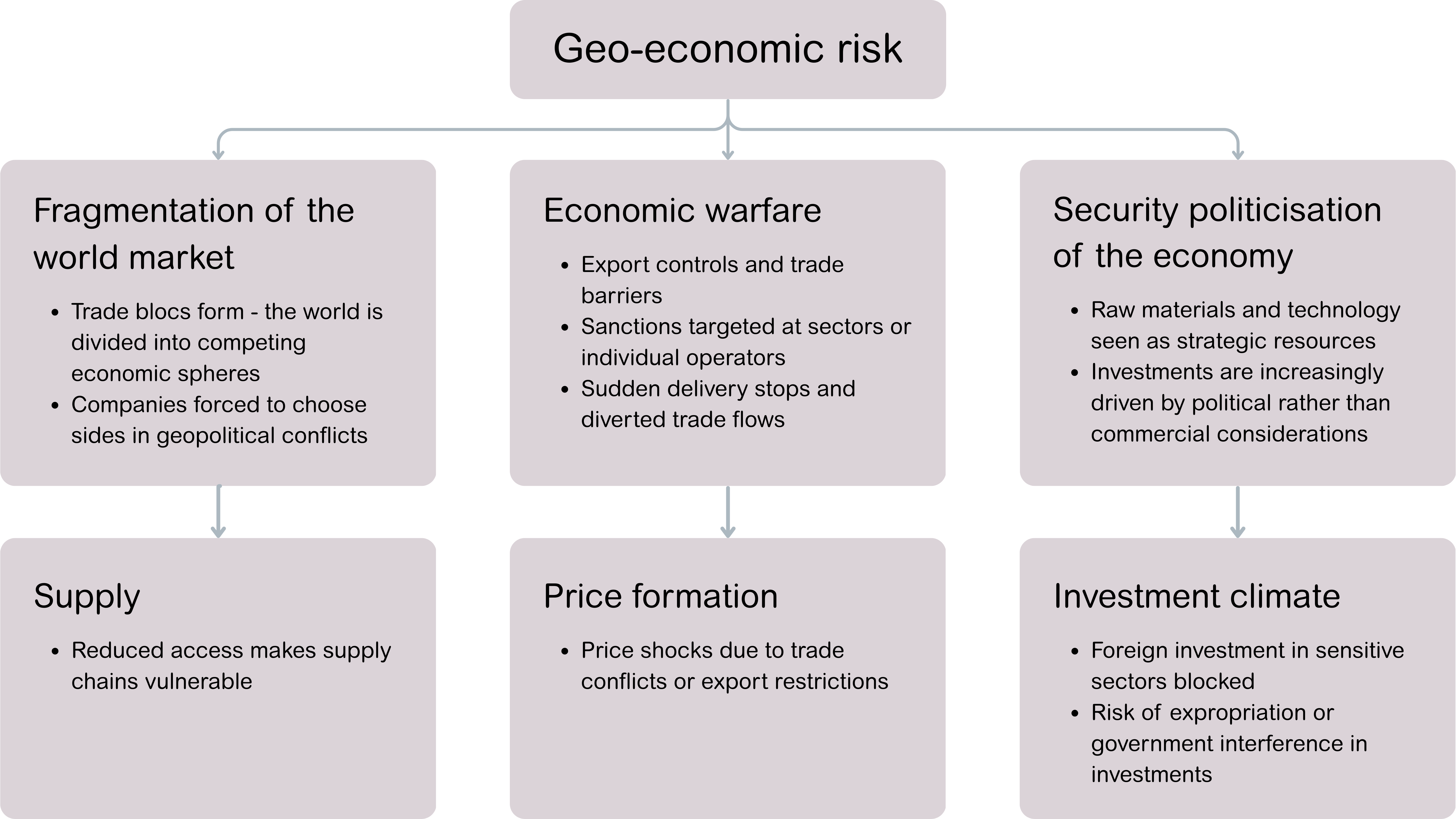
However, recent developments signal a clear shift from a liberal to a more geo-economically driven world order, where state intervention in the economy is becoming increasingly common. As great power competition intensifies, global trade networks are increasingly viewed as national vulnerabilities rather than as engines of economic cooperation. Trade dependencies and the risk of supply chain disruptions have heightened the focus on national security, resilience, and self-sufficiency. The result is more active political market steering, especially in strategically important sectors like critical metals.
Geo-economics – The logic of conflict in the grammar of trade
When states actively intervene in economic relations to achieve geopolitical and strategic objectives, they act geo-economically. Edward Luttwak, who reintroduced the term in the 1990s, described geo-economics as “the logic of conflict in the grammar of commerce.” After the Cold War, an optimistic view of global trade prevailed, where economic cooperation was believed to reduce the risk of conflicts through mutual dependency. However, Luttwak argued that the logic of conflict persists but is now more often expressed through economic means than military ones. He suggested that complex trade networks don’t necessarily reduce conflict risk but create asymmetric relationships where states controlling strategic sectors can leverage them for influence or coercion.
This insight is highly relevant today, as more states seek control over strategic resources and key technologies like critical minerals, semiconductors, and green energy tech. Through export controls, trade restrictions, and economic pressure, economic relations have become central tools for conducting geopolitics. What differentiates today’s situation from historical precedents is not the use of financial tools per se—such strategies have existed before—but how globalization and technological development have enabled a more intense and systematic use of economic warfare. Dependencies and asymmetries in global trade networks can now be exploited more strategically than ever, reshaping the balance of power and creating new investment risks in the commodities market.
Geo-economic risk and the commodity market
More and more states now regard critical minerals as part of their national security strategy, leading to increased security politicization of the commodity market. This is evident, for example, in Canada forcing Chinese firms to divest from critical mineral companies for security reasons, and in the U.S. Department of Defense funding mining companies in the U.S. and Canada to strengthen supply chains for strategic metals.
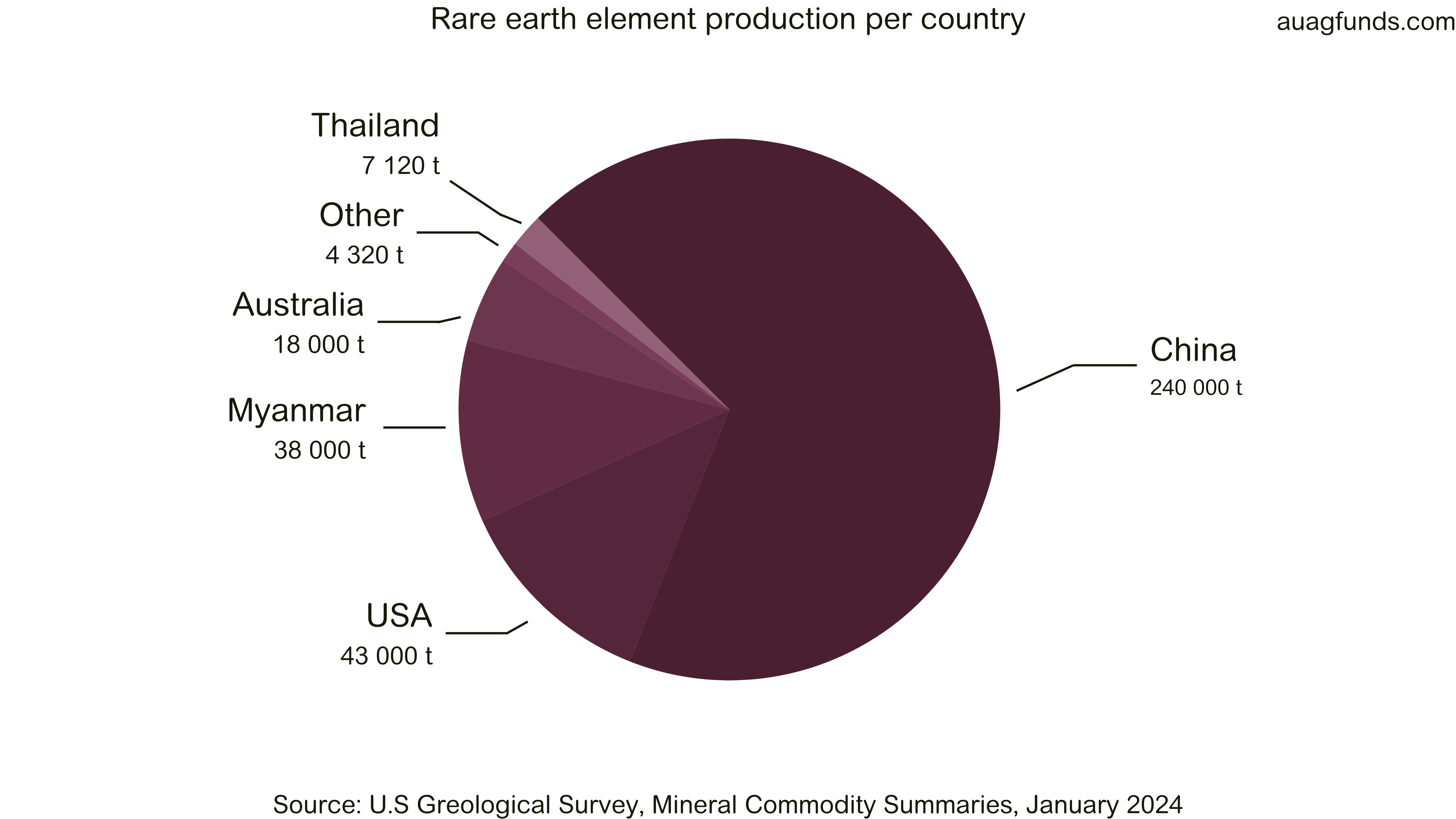
At the same time, economic warfare – in the form of export controls and trade restrictions – is being used more systematically to protect national interests and weaken competitors. A clear example is China’s export restrictions on rare earth elements, which directly impact the United States and the EU, which rely on China’s processing capacity while striving to build their capabilities in the field. China’s dominant position, which accounts for over 80 percent of global refining, gives it significant geopolitical influence, which has become a strategic tool in the growing race for technology and resources. See image below.
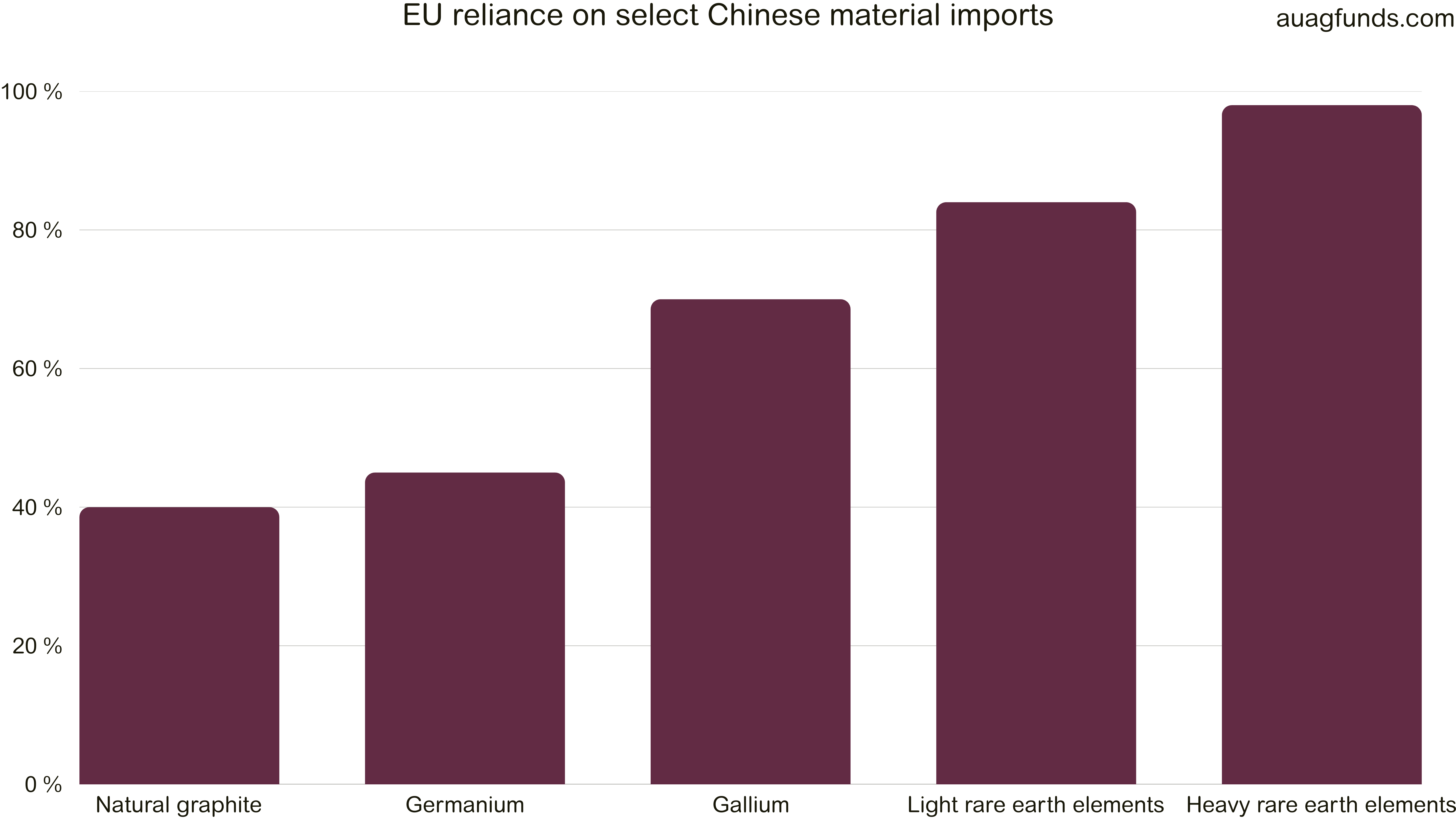
 These two factors—security politicization and economic warfare—have contributed to a growing fragmentation of the commodity market. The U.S. and EU are building parallel supply chains to reduce dependency on China, while China uses export restrictions to retain control over key technologies and resources. One consequence is that the EU currently depends on China for several critical metals – see image below. Over time, this may force companies to choose between different markets. The experience following Russia’s invasion of Ukraine shows how Western companies, under political pressure, rapidly exited the Russian market. This highlights how geopolitical polarization influences corporate strategic decisions. The result is a more polarized and uncertain market, where trade flows are increasingly governed by political strategy rather than traditional economic drivers.
 For investors, these geo-economic risks—security politicization, economic warfare, and fragmentation—make markets less predictable. Strategies that once relied on open markets and low political risk must now be reassessed. Successful capital allocation will, therefore, require careful analysis of political decisions and government interventions and how they affect the commodity sector in both the short and long term.
What does this mean for investors in the mining and mineral sector?
The shift to a geo-economically driven world order presents new conditions for companies and investors in the mining and mineral sector. Security politicization, economic warfare, and fragmentation can constrain supply and increase price volatility for critical metals. Since supply-side adjustments take time—new mining projects can take decades—sudden shifts in availability can lead to abrupt or long-term price movements when exports are restricted. For investors, it becomes essential to understand how these geo-economic risks interact and influence market dynamics.
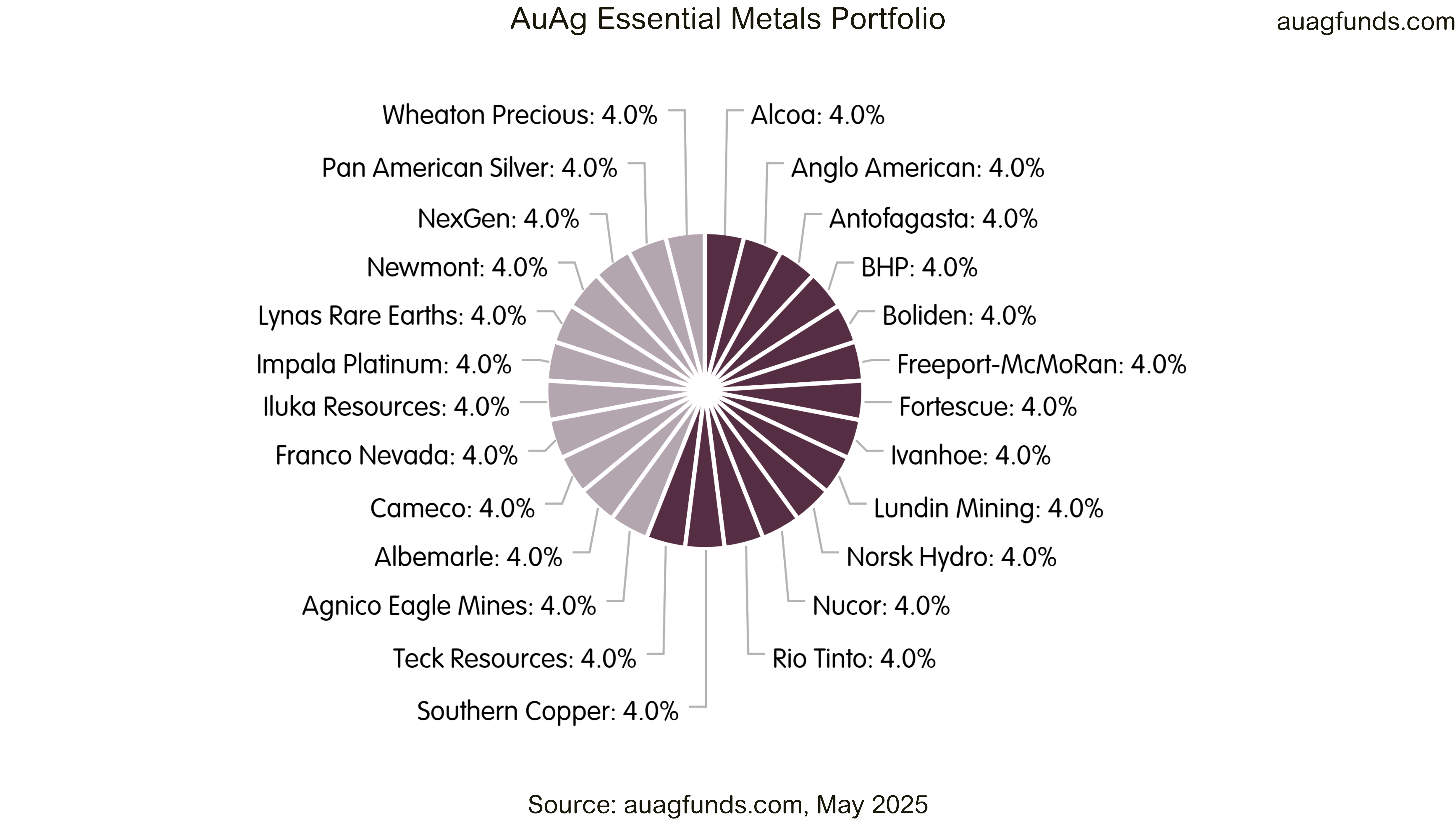
AuAg meets this challenge by offering investment exposure to metals through mining companies that benefit from increasing security politicization and government efforts toward self-sufficiency. By providing investors with a diversified portfolio of mining firms focused on precious and critical metals, AuAg offers access to a segment expected to be significantly impacted by ongoing geo-economic transformation. For investors seeking exposure in this area, active management by experts who continuously evaluate these risks may be a strong alternative. The AuAg Essential Metals fund invests in 25 mining companies producing several of the metals, such as copper, lithium, uranium, and rare earth elements, that are now central as global leaders strive for strategic advantages.
Continue to part 2 of this series, which focuses on the Critical Raw Materials Act (CRMA).
By AuAg Funds
References:
Attinasi, M. G., Mancini, M., Boeckelmann, L., Giordano, C., Meunier, B., Panon, L., ... & Smagghue, G. (2024). Navigating a fragmenting global trading system: insights for central banks. Retrieved from: Papers
Cecco, L. (2022, November 3). Canada orders China to divest from country’s critical minerals companies. The Guardian. Retrieved from: The Guardian
Liu, S., & Patton, D. (2023, December 22). China bans export of rare earths processing tech over national security.
Luttwak, E. N. (1990). From geopolitics to geo-economics: Logic of conflict, grammar of commerce. The National Interest, (20), 17–23: Jstor
Oker-Blom, M. (2022). Geo-economics or strategic use of economic power. Ekonomiska Samfundets Tidskrift, 75(1), 21–31. Retrieved from Harisportal
Ponte, S., Gereffi, G., & Raj-Reichert, G. (Eds.). (2019). Handbook on Global Value Chains. Edward Elgar Publishing.
Roberts, A., Moraes, H. C., & Ferguson, V. (2019). Toward a geoeconomic order. Retrieved from: Papers
U.S. Department of Defense. (2022, February 22). DOD awards $35 million to MP Materials to build U.S. heavy rare earth separation capacity. U.S. Department of Defense. Retrieved from: Defense
Wigell, M., Helwig, N., & Fjäder, C. (2021). Recognizing 'geoeconomic risk': Rethinking corporate risk management for the era of great-power competition. Finnish Institute of International Affairs.

)
)
)