)
The beginning of a new Gold Rush
Elements is AuAg's monthly letter highlighting macroeconomic observations from the previous month. Our focus is on events that impact the investment environment for gold, silver and other essential metals. These observations are presented with images and charts laid out efficiently and concisely.
Intro
April was a strong month for gold, with continued price increases and growing interest in the precious metal. The silver price has not kept pace with gold's performance, making it particularly interesting from an investment perspective.
The situation surrounding the “critical metals” needed for industry, high-tech, defense, and the green transition is receiving increasing attention in the ongoing geopolitical power struggle.
In this month’s letter, we take a closer look at recent market developments for investors in metals and their mining companies, continue to read below.
Gold and Silver during the previous month
Gold closed the month at USD 3,288, marking a 5.2% increase in USD during April. On April 22, the gold price reached a new all-time high of USD 3,500 per troy ounce.
Silver ended the month at USD 32.61, representing a 4.2% decline after a volatile month. The price experienced significant fluctuations, initially dropping from USD 34.06 to USD 29.60 early in the month, before recovering quickly to the USD 32–33 range.
Gold already surpassed our full-year target of USD 3,300 by USD 200 during April and was up 33.3% for the year to date. While the price has since cooled, following selling pressure from weak hands, stronger hands are now positioning for the next leg higher. Although gold is currently trading below our annual target, that target now appears conservative, especially as several major banks consider levels between USD 3,500 and 4,000 to be realistic.
We observed particularly strong buying from China, which contributed to the rapid rise in the gold price. Interestingly, Chinese investors were also disproportionately represented among those who sold during the correction that brought gold back below USD 3,300 per troy ounce.
Gold has now outperformed the S&P 500 over the past 20 years. However, we emphasize the importance of owning and combining low-correlated assets to achieve the best risk-adjusted returns over time.
Gold's strong momentum also pushed the Gold-to-Silver Ratio (GSR) above 100:1 during April—a rare occurrence that has only happened three times in history: in 1940, 1991, and 2020. According to our models, gold remains undervalued below USD 4,290, suggesting potential for a further 30% upside over the next year without the metal becoming overvalued. If gold is still considered cheap, then silver is exceptionally undervalued and represents one of the most compelling investment opportunities in years.
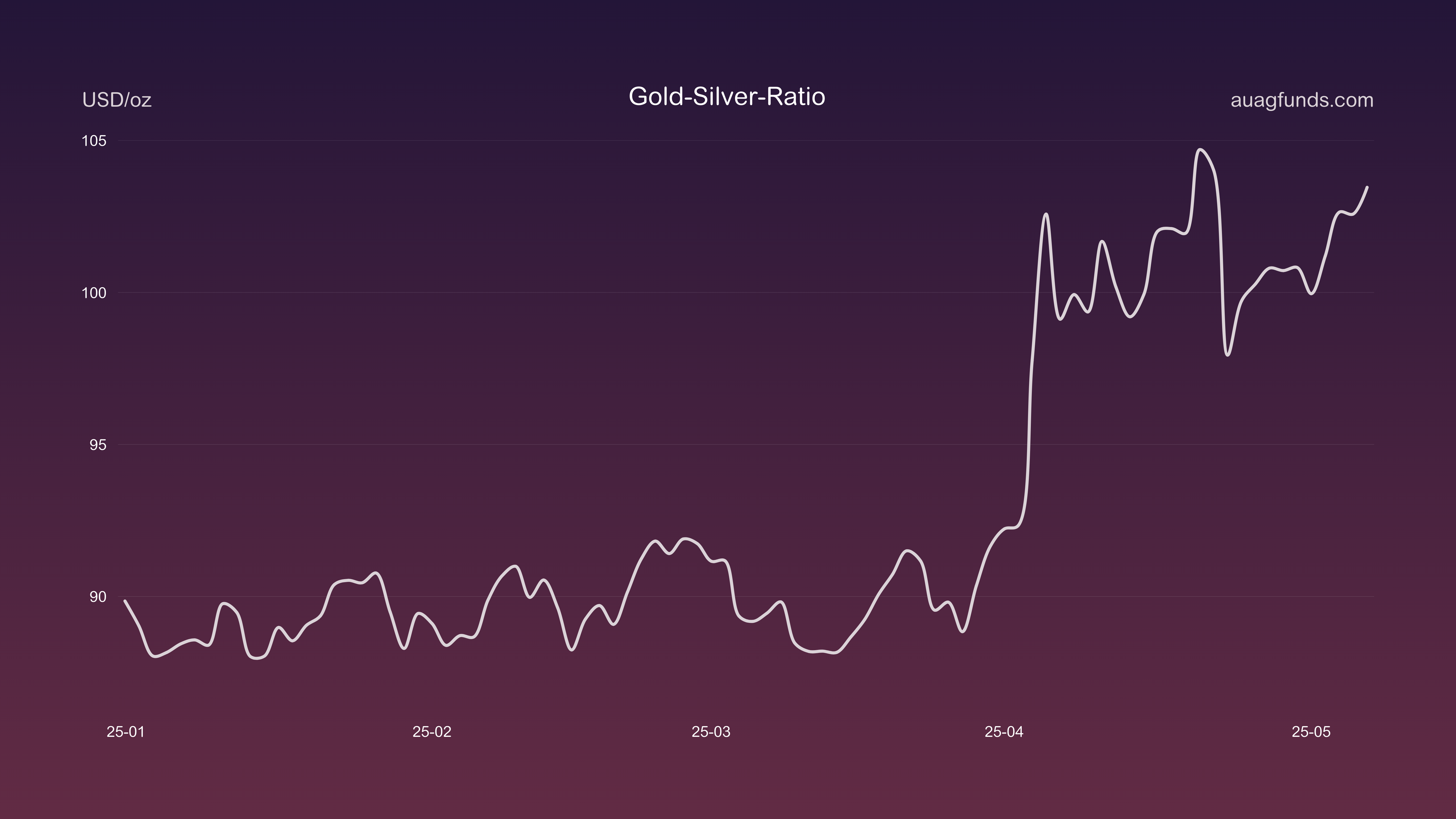
According to our models, gold remains attractively priced as long as it trades below USD 4,290 per troy ounce. This suggests there is room for further gains of up to +30% over the coming year, without gold being considered expensive. And if gold is cheap, then silver is exceptionally cheap. This makes silver one of the most exciting investment opportunities on the market for many years to come.
AuAg Funds – Highlights
Our latest fund, AuAg Gold Rush, has delivered outstanding performance so far this year, compared to the broader global equity markets and the gold price itself. The differences are significant, as the fund has capitalized on the remarkable “gold rush” defining the first four months of 2025.
An additional factor we have previously highlighted is the impact of a weakening dollar. So far in 2025, the USD has depreciated by 12.6% against the SEK, including a 3.7% drop in April alone (and by 8.6% and 4.5%, respectively, against the EUR). This currency effect comes before the expected leveraged performance of gold-related companies relative to the commodity itself. With the dollar’s decline, gold has risen by just 9.35% in SEK terms this year, while AuAg Gold Rush has surged by 29.4% (+14.4% and +35.1%, respectively, in EUR).
April’s standout performer in the fund was our “Swedish pride,” Lundin Gold, which gained 29.3% in USD during the month. That AuAg Gold Rush has grown rapidly in assets under management in 2025, thanks to both new and loyal investors, and of course, the fund’s strong returns, making this journey all the more enjoyable.
Global Insights with AuAg
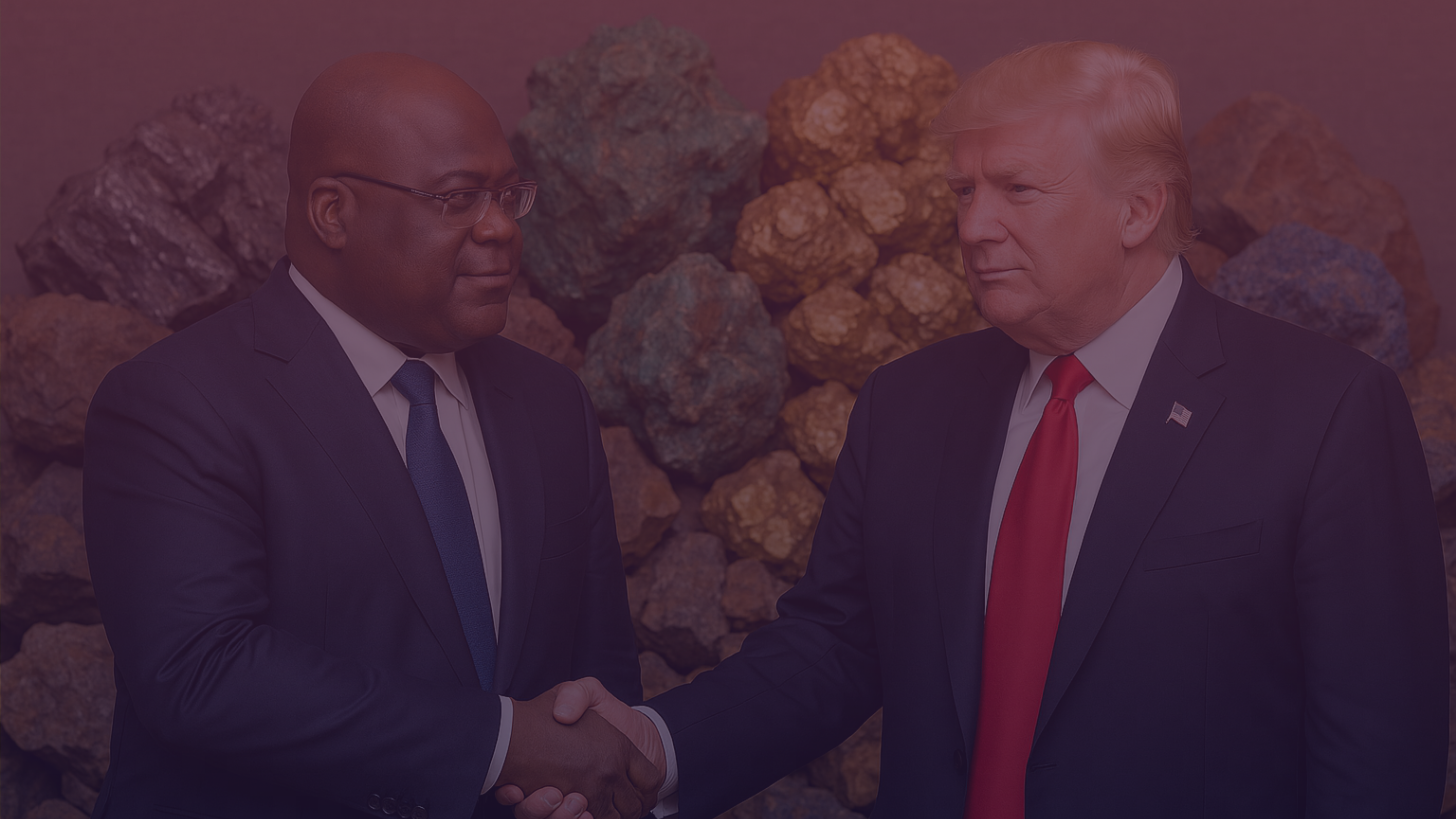
President Trump is placing significant emphasis on winning the global “battle for metals.” After showing interest in resource-rich nations such as Mexico, Canada, and Greenland, attention has shifted toward Ukraine and the Democratic Republic of Congo. One of the United States' key vulnerabilities lies in its dependence on resource-rich countries and China’s overwhelming dominance in the supply of rare earth elements. This is a critically important theme, both for today and the future, which is why we have launched an article series, AuAg Critical Insights, to explore the current situation and its far-reaching implications. You can also subscribe to us for free on LinkedIn for ongoing updates.
What surprises us is how media coverage of these developments often fails to translate into broader investor action. Few investors seem to recognize how vital it will be to hold equity stakes in the companies that extract these essential metals. This disconnect also creates remarkable opportunities for early movers who position themselves ahead of the crowd.
Meanwhile, trade tensions persist, with tariffs being imposed and retaliated against. While there is hope for gradually de-escalating these trade conflicts, much damage has already been done. The uncertainty has led many companies to delay or pause major investment projects. As a result, several national economies could face slower growth trajectories for years.
It is becoming evident that the United States is directing much of its geopolitical and economic strategy toward curbing China’s global influence. In response, China remains resolute and unwilling to yield. To manage the financial pressure, Beijing has rolled out a series of stimulus packages while simultaneously imposing restrictions on the export of several rare earth elements. These actions are heightening global economic tensions and contributing to future monetary inflation as central banks, particularly in China, accelerate money printing.
Meanwhile, the U.S. economy is showing signs of deceleration, having recently reported negative growth. American consumers feel the pinch from added tariff costs and a weakening dollar, driving prices higher domestically and suppressing consumer spending. At the same time, budget cuts across various public agencies raise the risk of long-term unemployment for those affected.
The Federal Reserve’s current stance—refusing to lower interest rates—adds another layer of complexity. If rates are not eased gradually now, a delayed response may require much more aggressive cuts in the future. The eventual outcome is likely to be the same: intensified monetary inflation that boosts the prices of industrial metals, and even more so, the monetary metals—silver and gold.
This inflationary backdrop provides the ideal conditions for gold to resume its upward trajectory toward USD 3,500 and potentially reach JPMorgan’s forecasted target of USD 4,000 per troy ounce.
Be part of the journey
More than 100,000 investors across Europe have invested in the AuAg funds.
)
)
)
)
Featured content this month
Use our unique "Research Centre" on an ongoing basis to take part in our current view of the market and the macro environment. We communicate all the time. Here are a few media links from the past month:
)
)
)
